UK–Tanzania Trade Roadshow in Arusha highlights expanding export opportunities and £1 billion ambition
Date: 2026-05-27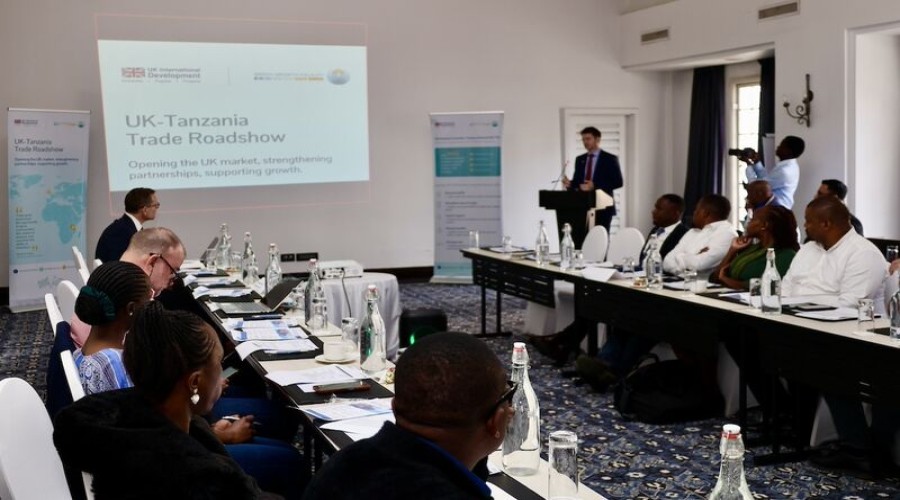
By: Kanto Kai Okanta
The
recent UK–Tanzania Trade Roadshow held in Arusha has underscored growing
commercial opportunities for Tanzanian exporters and a deepening of bilateral
trade relations between Tanzania and the United Kingdom.
The event, hosted by the British High Commission in Tanzania in
partnership with the UK–Tanzania Green Growth
Facility, convened exporters, trade specialists, certification experts,
government officials, and private sector stakeholders. Discussions focused on
how Tanzanian businesses can better position themselves to access the UK market
under the Developing Countries Trading Scheme (DCTS), a framework designed to
enhance market entry conditions for eligible developing economies.

A central theme of the roadshow was
the strengthening alignment between policy support, private sector readiness,
and institutional coordination. Participants highlighted that while demand in
the UK market continues to rise, Tanzania’s export capacity is also expanding,
supported by targeted interventions and improved commercial linkages.
Key initiatives presented during the
engagement included the Horticulture Export Accelerator Programme, implemented
by the Tanzania Horticultural Association
with support from the UK–Tanzania Green Growth Facility, as well as the
Tanzania Coffee Hub-UK initiative. These programmes are designed to enhance
value chain efficiency, improve compliance with international standards, and
strengthen market connectivity for Tanzanian producers.
Additional developments referenced
during the roadshow included emerging financing partnerships, expanded
commercial networks, and progress toward improved air connectivity between
Tanzania and the United Kingdom, including plans for direct flights aimed at
reducing logistical barriers for exporters.
Tanzania’s High Commissioner to the
United Kingdom, Mbelwa Kairuki, delivered
a key address emphasizing that the conditions for sustained export growth are
increasingly in place. He noted that demand in the UK market is rising,
Tanzanian export capacity is improving, and trade facilitation measures under
the DCTS are easing market access. He also highlighted growing coordination
between government institutions, private sector actors, and industry
associations as a critical driver of progress.

In his closing remarks, Kairuki
outlined an ambitious but achievable national export target, calling for
stronger collective action across stakeholders.
“The demand exists, the opportunities
exist. What remains is for us to move with greater coordination, speed, and
determination. Let us work together—government, private sector, producers,
exporters, financial institutions, and development partners—to reach our shared
objective of increasing Tanzania's exports to the United Kingdom to £1 billion
by the year 2030. That ambition is achievable.”
The
roadshow concluded with renewed commitments from stakeholders to strengthen
UK–Tanzania trade cooperation and accelerate export-led growth, positioning
Tanzania to capture a greater share of high-value UK market opportunities in
the coming years.