SASSCAL leads community workshop on climate resilience and sustainable land management in Botswana
Date: 2026-06-01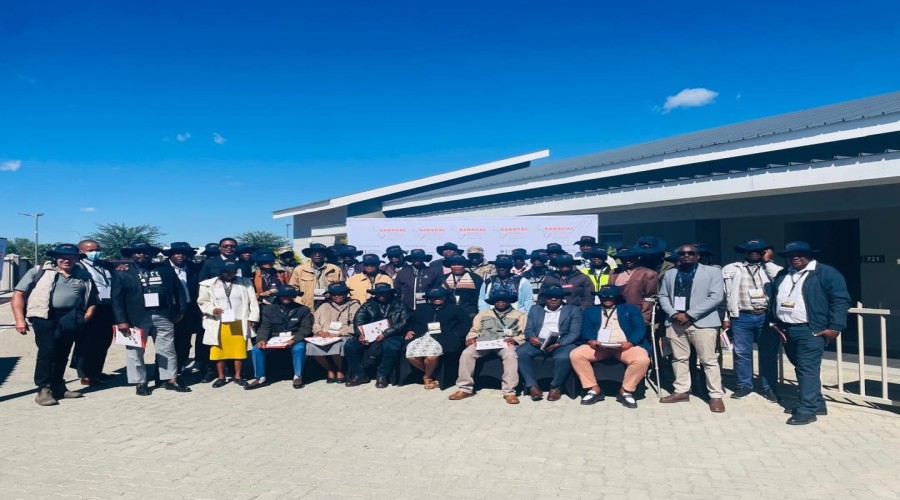
By: Nana Appiah Acquaye
The Southern African Science
Service Centre for Climate Change and Adaptive Land Management (SASSCAL), in
collaboration with several research and government institutions, has conducted
a five-day community engagement workshop in West Hanahai, Ghanzi District,
Botswana, aimed at strengthening climate resilience and promoting sustainable
land-use management.
The workshop brought
together traditional leaders, councillors, farm managers, Village Development
Committee members, government officials and researchers to address
environmental challenges affecting community pastoral farms.

The initiative was organized
in partnership with the Okavango Research Institute, the Botswana University of
Agriculture and Natural Resources, the Department of Forestry and Range
Resources, the Department of Animal Production, and the Ghanzi District Council
through its Department of Social and Community Development.
Discussions focused on key
issues including climate change, overgrazing and bush encroachment, which
continue to impact rangeland productivity and the livelihoods of communities
dependent on livestock farming.
Participants received
training in ecosystem mapping and rangeland assessment techniques designed to
support evidence-based land management and conservation planning. The programme
also included field visits to Tiisa Farm and West Hanahai Farm, where participants
observed and discussed sustainable grazing practices, including the
implementation of split-ranch grazing systems.

The workshop further
facilitated the documentation of indigenous knowledge related to medicinal
plants, contributing to efforts to preserve traditional ecological knowledge
while supporting sustainable resource management.
Organizers indicated that
the activities generated important baseline data that will help guide future
interventions aimed at improving rangeland management and strengthening
resilience to climate-related pressures.
Preliminary findings from
the assessments revealed lower forage availability around watering points,
providing valuable insights into grazing patterns and potential management
measures needed to improve land productivity and ecosystem sustainability in the
district.
The workshop forms part of
broader efforts to support climate adaptation, sustainable agriculture and
community-based natural resource management across southern Africa.