By: Nana
Appiah Acquaye
Egypt is stepping up efforts
to attract technology investment, expand artificial intelligence adoption and
help startups move from early-stage development to regional and international
markets as the government seeks to deepen the country’s digital economy.
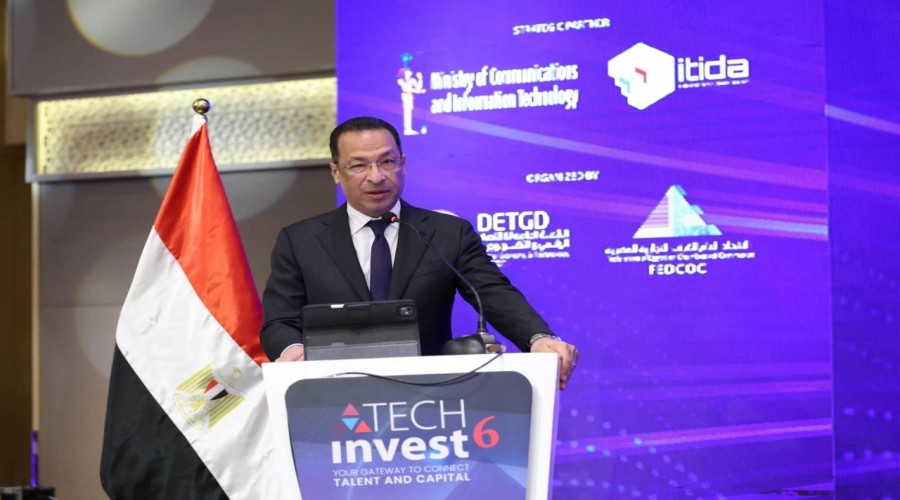
Minister of Communications
and Information Technology Raafat Hindi announced the priorities at the opening
of the sixth Tech Invest Egypt conference in Cairo, organised by the General
Division for Digital Economy and Technology of the Federation of Egyptian
Chambers of Commerce in strategic partnership with the Information Technology
Industry Development Agency (ITIDA).
Held under the slogan
“Empowering Competencies... Developing Investments,” the conference brought
together government officials, investors, entrepreneurs, startups, technology
companies and academic institutions to discuss investment and growth opportunities
in Egypt’s technology sector.
Hindi said entrepreneurship
is a central pillar of the government’s strategy to build an innovation-driven
digital economy, adding that the Ministry is working with the business
community to address challenges facing startups in funding, growth, market access
and the attraction and retention of talent.
He said the Ministry’s
support for startups goes beyond encouraging the establishment of new companies
to creating mechanisms that enable promising businesses to grow within Egypt
and expand into regional and international markets.
The Minister outlined the
government’s vision for the next phase of digital economy development, centred
on accelerating digital transformation, localising technology, building digital
skills, expanding infrastructure, strengthening sector governance, creating an
enabling environment for investment and innovation, and safeguarding digital
sovereignty.
Hindi also highlighted the
Digital Egypt Innovation Centers, which are now operating across more than 20
governorates. The centres provide entrepreneurs with support covering skills
development, entrepreneurial training, incubation, technical, legal and marketing
advisory services, as well as links to potential investors.
The Ministry is also
preparing infrastructure to enable innovative companies to develop solutions
and securely integrate with government systems, a move expected to create
opportunities for GovTech companies and increase private-sector participation
in improving public services and the investor experience.
Artificial intelligence was
another major focus of the conference, with Hindi describing AI as a
significant opportunity for Egyptian companies and calling for a shift from
discussing its potential to deploying applications that deliver measurable and
responsible impact across government and the private sector.
He highlighted progress by
Egyptian talent in areas including language processing, speech-to-text,
translation and healthcare, and announced the pilot launch of the Egyptian
language model “Karnak” and the “Lughat” and “Bil Masry” applications.
The Ministry is also working
to expand access to advanced computing resources for researchers and
developers, with the aim of enabling them to develop solutions that generate
intellectual property and can compete in international markets.
Hindi further disclosed
plans for a new competition aimed at encouraging entrepreneurs and startups to
develop AI solutions for government institutions. Winning solutions would
initially be piloted in one ministry before potentially being expanded to other
government entities.
The Minister also pointed to
strong growth in Egypt’s ICT sector, which recorded a 24.3 percent growth rate
in the fourth quarter of the 2025/2026 fiscal year, described as the highest in
the sector’s history.
He said outsourcing exports
reached $5.1 billion by the end of 2025, with the government targeting $8
billion by 2028 as it seeks to expand the outsourcing industry, localise
electronics manufacturing and increase domestic value addition.
On the sidelines of the
conference, Hindi toured an exhibition of startups and innovators, where he
reviewed projects and digital solutions in artificial intelligence and digital
transformation and expressed the Ministry’s commitment to supporting their development
and growth.
President of the Federation
of Egyptian Chambers of Commerce Ahmed El-Wakil described the conference as an
example of cooperation between government, business and the technology sector,
stressing the role of the chambers in supporting investment, connecting
companies with public authorities and communicating private-sector needs.
Head of the Federation’s
General Division for Digital Economy and Technology Khalil Hassan Khalil said
Tech Invest Egypt 6 comes at a critical time as technology and artificial
intelligence continue to reshape business models and economic competitiveness.
He said the division aims to
use the conference to move beyond identifying challenges and instead develop
practical solutions and partnerships that can increase investment in ICT and
maximise the value of Egypt’s digital economy.
The conference features four
specialised sessions covering investment in the ICT sector, corporate AI
strategies, pathways for startups to scale and access financing, and the
Personal Data Protection Law and its executive regulations.
The programme also includes
sessions designed to connect entrepreneurs with incubators and accelerators and
introduce them to institutions supporting innovation.