By: Nana
Appiah Acquaye
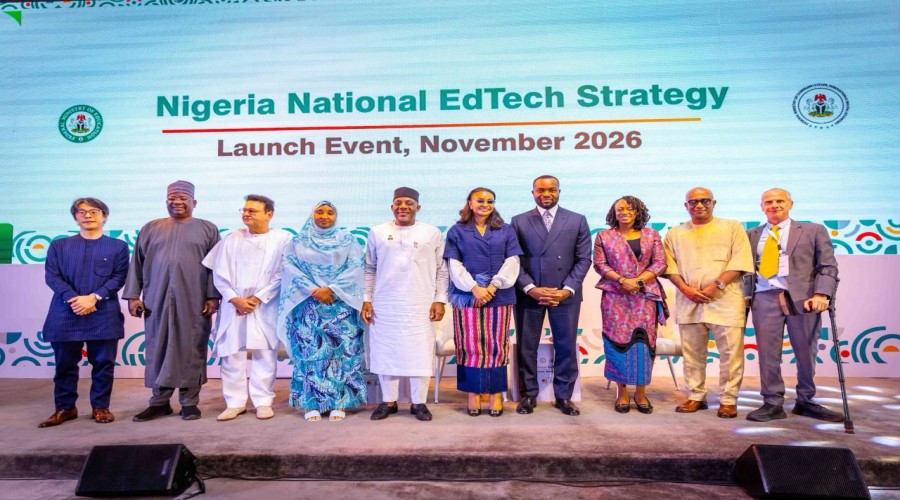
Nigeria has launched a
national Education Technology (EdTech) Strategy aimed at transforming teaching
and learning through technology, improving learning outcomes and strengthening
the country’s education innovation ecosystem.
The strategy provides a
common framework for government, the private sector, civil society and
development partners to invest in, develop and deploy technology to improve
access to educational opportunities and the quality of learning across the
country.
Minister of Communications,
Innovation and Digital Economy, Dr. ‘Bosun Tijani, announced the launch,
describing it as an important step towards using technology to address
longstanding barriers to education while building a vibrant Nigerian EdTech
ecosystem.
According to Tijani, Nigeria
has an opportunity to replicate in education the kind of growth achieved in its
financial services sector, where interoperability, enabling infrastructure and
a thriving innovation ecosystem helped unlock remarkable progress.
He said the strategy was not
simply about introducing technology into classrooms but about fundamentally
improving how Nigerians teach, learn and access educational opportunities.
"What excites me most
is the opportunity to bring government, the private sector, civil society and
development partners behind a shared national agenda for investing in,
developing and deploying technology to improve learning outcomes," Tijani
said.
He added that the strategy
provides a framework for aligning investments, encouraging innovation and
collectively delivering measurable improvements in learning outcomes.
The minister expressed
appreciation to the Minister of Education, Dr Tunji Alausa, for his leadership
and collaboration, as well as the Mastercard Foundation, particularly Suraj
Shah, for its partnership.
He also acknowledged Wura
Junaid for leading the work, the World Bank Group for its support, and the
teams across both ministries involved in developing the strategy.
Tijani stressed that the
success of the initiative would depend on effective implementation, noting that
the real opportunity now lies in translating the framework into tangible
improvements in Nigeria's education system.
He encouraged stakeholders
interested in the future of education in Nigeria to read the strategy, engage
with its recommendations and contribute to its implementation.