WHO Africa and Google research explore AI-powered geospatial tool to anticipate of disease outbreak
Date: 2026-02-05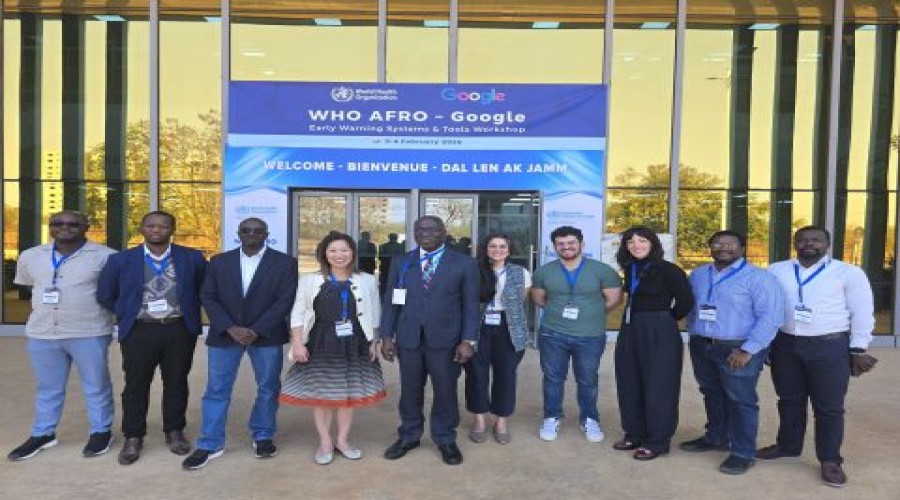
By: Nana Appiah Acquaye
Teams
from Google Research and the World Health Organization (WHO) African Region
have held a two-day technical meeting in Dakar, Senegal, to advance the
development of an artificial intelligence-powered geospatial tool aimed at
strengthening early warning systems and improving the anticipation of disease
outbreak risks across Africa.
The
meeting focused on laying the technical and operational foundations for the
initiative, including the final selection of a pilot country for initial
deployment. Participants also mapped the workflows of public health
surveillance teams to ensure the proposed solution aligns with on-the-ground
operational realities.

Discussions
further assessed existing data infrastructure within the region and defined the
technical interface for the prototype, with the goal of enabling seamless
integration into current disease surveillance and early warning systems.
According
to the World Health Organization African Region, the collaboration with Google
Research has the potential to significantly enhance disease surveillance
capabilities on the continent by leveraging AI and geospatial data to support
faster, more accurate risk assessment and response. The project is expected to
contribute to improved preparedness and timely public health interventions
across Africa.