Global AI for Learning Alliance launched to drive scaled impact in education
Date: 2026-02-17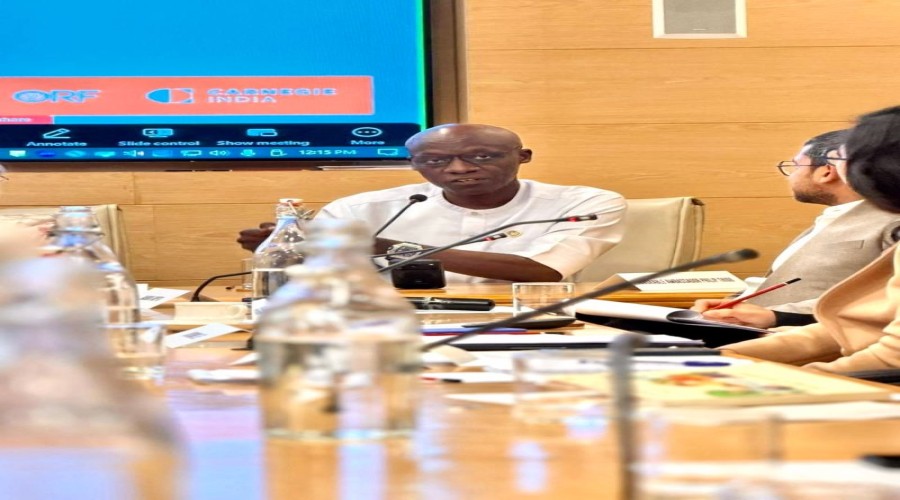
By: Nana Appiah Acquaye
The
Global AI for Learning Alliance (GAILA) was formally launched in New Delhi,
bringing together a coalition of international organizations, governments, and
technology partners committed to accelerating the responsible adoption of
artificial intelligence in education.
The
initiative, unveiled with participation from UNICEF, Anthropic, Google, Kenya,
Dalberg, and other stakeholders, seeks to shift AI in education beyond
experimental pilots toward standardized frameworks, evidence-based
implementation, and scalable solutions capable of delivering measurable
learning outcomes.

Speaking
at the launch, Ambassador Philip Thigo, Kenya’s Special Envoy on Technology, stressed
the strategic importance of talent development within the AI ecosystem. He
described human capital as a core pillar of technological sovereignty,
particularly for countries in the Global South, noting that investments in
skills and expertise represent the most immediate and sustainable pathway to
building local capacity for AI evaluation, governance, and innovation.
Ambassador
Thigo underscored the transformative potential of education as a mechanism for
broad-based opportunity, highlighting the role of AI in empowering teachers and
enhancing learning systems. He stressed that equitable deployment must remain
central to AI integration strategies, warning that uneven adoption risks
deepening existing disparities if advanced technologies primarily benefit
private education institutions.
Central
to the discussions was the need to bridge the gap between public and private
sector adoption of AI tools. Participants highlighted the importance of
ensuring that AI-driven educational solutions are designed to function
effectively within public systems, particularly in environments characterized
by low bandwidth, budget constraints, and linguistic diversity.

The
launch also drew attention to the growing necessity for shared standards.
Stakeholders advocated for the development of common benchmarks to guide
learning impact assessment, safety protocols, privacy protections, and
procurement processes. Such standards, speakers argued, are critical to
reducing fragmentation and enabling interoperability across jurisdictions and
educational contexts.
The
formation of GAILA reflects a broader global push to align AI innovation with
developmental priorities. By focusing on evidence generation, governance
frameworks, and inclusive implementation models, the alliance aims to position
artificial intelligence as a catalyst for strengthening education systems
rather than exacerbating inequality.
With
the alliance now operational, participating partners signaled a collective
commitment to advancing talent development, supporting public-sector
deployment, and scaling validated AI solutions capable of delivering durable
educational impact.