By: Nana
Appiah Acquaye
The Science Diplomacy
Capital for Africa has convened an international group of experts to begin
drafting an ethical framework to guide the Human Exposome Project (HEP),
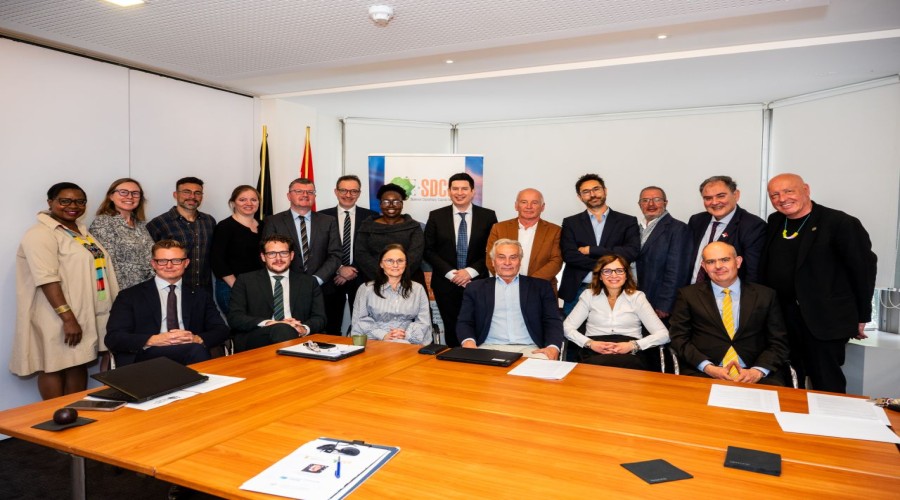
following a high-level meeting held at the South African Mission to the
European Union on 17 June.
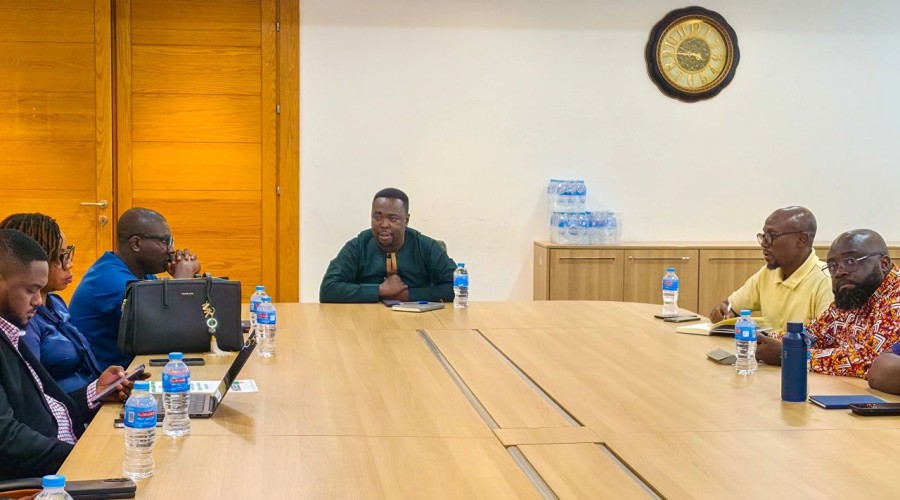
The session brought together
30 participants representing science, policy, and international governance
communities to develop an initial 20-point blueprint for the ethical design,
conduct, governance, interpretation, and application of exposome research.
The initiative was sponsored
by the Transatlantic Think Tank for Toxicology, Science Diplomacy Capital for
Africa, and South Africa’s Department of Science, Technology and Innovation,
with support from the International Network for Governmental Science Advice
(INGSA) and the Global Exposome Forum.
The meeting also served to
honour the late Professor Julian Kinderlerer, former President of the European
Group on Ethics, who was remembered for his contributions to science governance
and ethical policy development.
The session was chaired by
Professor Thomas Hartung and moderated by senior experts including DDG Daan du
Toit, Eudy Mabuza, Denis Sarigiannis, David Budtz Pedersen, Caradee Wright, and
Nathalie Moll.
Participants agreed on a
draft framework intended to guide the ethical foundations of the Human Exposome
Project, which aims to map the full range of environmental exposures affecting
human health across the life course and assess their biological impacts.
The Human Exposome Project
is positioned as a major global scientific initiative designed to complement
genomic research by focusing on environmental, biological, and social
determinants of health. Organisers noted that while genetic factors account for
a portion of disease risk, a significant share is influenced by environmental
and lifestyle exposures.
The project also emphasizes
the importance of equitable participation, particularly for developing
countries, to ensure that benefits from exposome research are shared more
broadly than in previous large-scale scientific initiatives.
Organisers stressed that
exposome science presents both major opportunities and ethical challenges,
requiring strong governance structures to ensure transparency, accountability,
and inclusivity in research and application.
The draft ethical blueprint
will be further discussed at UNESCO on 17 July, ahead of its planned release at
the Science Forum South Africa 2026 in Tshwane. A broader global communication
and engagement campaign is scheduled for 2027, including presentations at the
AAAS Annual Meeting in Chicago, the World Science Forum in Istanbul, and the
World Conference of Science Journalists in London.
According to the organizers,
the Human Exposome Project seeks to ensure that scientific innovation is
matched by social legitimacy, democratic accountability, and equitable
benefit-sharing across regions and populations.