By: Nana
Appiah Acquaye
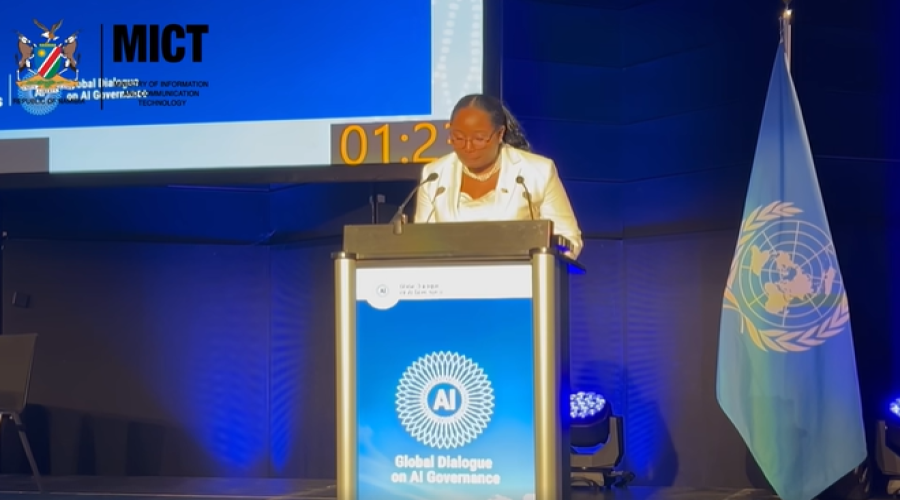
Namibia's Minister of
Information and Communication Technology, Hon. Emma Theofelus, has stressed
that without inclusive digital infrastructure, artificial intelligence risks
becoming a tool for the few rather than a catalyst for shared prosperity, as she
delivered the country's national statement at the closing of the United Nations
Global Dialogue on AI Governance.
Speaking on 7 July 2026,
Theofelus represented Namibia at the high-level dialogue on behalf of President
Dr. Netumbo Nandi-Ndaitwah, joining government leaders and international
stakeholders to discuss global cooperation on the responsible governance of artificial
intelligence.
In her address, the Minister
acknowledged the transformative potential of AI but emphasized that Namibia's
immediate priority is building the digital foundations necessary to support its
safe, inclusive and responsible adoption.
She outlined Namibia's
Digital Transformation Agenda, which focuses on expanding rural connectivity,
establishing community digital centres, strengthening digital identity systems,
improving data governance and developing AI skills among young people and
public servants.
Theofelus also called for
stronger international cooperation to expand access to AI infrastructure, open
datasets and responsible open-source AI models, saying these resources are
essential to ensuring that countries can innovate while maintaining safety,
inclusion and trust.
The Minister further
highlighted concerns over bias in AI systems and the growing threat of
technology-facilitated gender-based violence, warning that such challenges
could undermine progress made in advancing the rights and empowerment of women
and girls. She urged governments, development partners and the private sector
to work together to ensure AI is deployed in ways that benefit society and
support sustainable development.
Concluding her statement,
Theofelus reaffirmed Namibia's commitment to working with the international
community to ensure that no country is left behind in the AI era, emphasizing
that equitable access, knowledge sharing and global partnerships will be key to
shaping a responsible and inclusive future for artificial intelligence.