By: Robert Kwaku Annor
Mauritius is strengthening
its position as a digital innovation hub with renewed focus on artificial
intelligence, digital infrastructure and responsible technology development,
according to the World Bank’s Regional Practice Director for Digital and AI,
Africa and Middle East, Michel Rogy.
Following a visit to
Mauritius, Rogy highlighted the country’s growing commitment to using digital
transformation and artificial intelligence as strategic drivers of economic
growth, innovation and public service delivery.
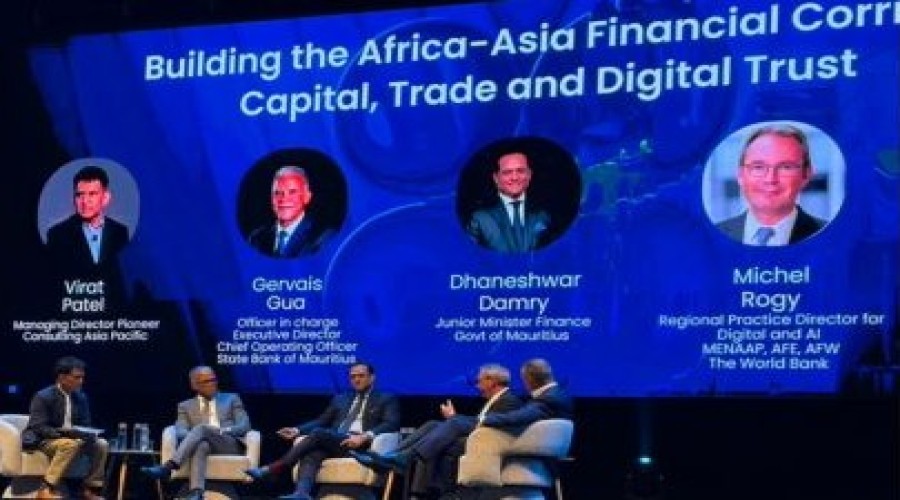
During the visit, Rogy
engaged with Mauritius’ Minister of Information Technology, Communication and
Innovation, Dr. Avinash Ramtohul, Junior Minister of Finance Hon. Dhaneshwar
Damry, and stakeholders within the country’s digital and AI ecosystem.
He noted that Mauritius is
pursuing an ambitious digital transformation agenda supported by strong
political leadership and a clear objective to deliver measurable outcomes over
the next three years.
The country’s Digital
Transformation Blueprint 2025–2029 has positioned artificial intelligence and
digitisation as key priorities, with AI and digital development identified as
one of the main pillars of the 2026–2027 national budget.
Rogy said Mauritius is
seeking to move beyond being a consumer of AI technologies by developing
capabilities to become a producer of AI solutions, particularly across
strategic sectors such as finance and education.
The country’s National AI
Strategy 2025–2029 is currently being implemented, alongside initiatives aimed
at strengthening digital skills, building local talent and establishing
responsible AI governance frameworks.
Among ongoing digital
initiatives is the deployment of DIVA, an AI assistant designed to support
public services, alongside KOREK, a government super application aimed at
improving access to digital services.
The private sector is also
playing a role in advancing AI adoption, with Mauritius Telecom piloting the
MyTGPT Education initiative in partnership with the Ministry of Education to
support personalised learning and connected classrooms.
Rogy also highlighted plans
by the Mauritian government to attract investment into the digital economy
through initiatives including a Start-Up Act, an Economic Development Board
Accelerator Scheme and the development of a 35-hectare high-tech Special Economic
Zone at Côte d’Or focused on AI, digital industries and advanced manufacturing.
The investments are expected
to be supported by improved trust, safety and security measures, including
responsible AI governance, child online protection, cybersecurity initiatives,
and strengthened digital legislation.
During his visit, Rogy also
participated in the Pan-African Cloud, Content and Telecoms Executive Summit
(CCT Africa 2026), where he discussed digital infrastructure financing,
investment opportunities and the World Bank Group’s Digital and AI Strategy and
Implementation Plan.
He said artificial
intelligence is driving a new phase of infrastructure development across
connectivity, data hosting and computing capacity, with growing interest in
GPU-as-a-Service models that could support the creation of locally relevant AI
solutions across Africa.
The World Bank
representative noted that strengthening digital infrastructure and mobilising
private sector investment will be critical to expanding access to digital
opportunities, with the institution targeting support to reach one billion
people globally by 2030 through digital and AI initiatives.