By: Nana
Appiah Acquaye
Côte d’Ivoire has launched a
new Master’s degree in Training Engineering at the National Pedagogical
Institute of Technical and Vocational Education (IPNETP) as part of efforts to
strengthen human capital development and modernise the country’s technical and
vocational education system.
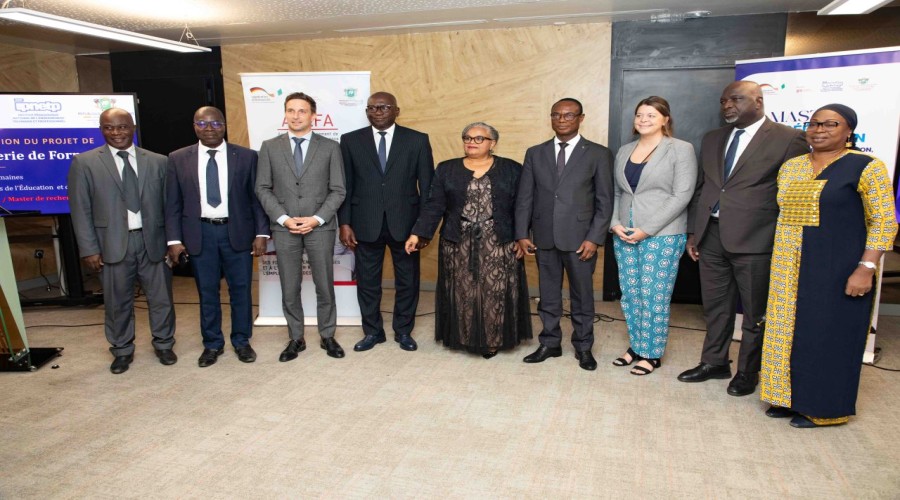
The programme was officially
presented during a ceremony held at the Seen Hotel in Abidjan on Tuesday, 4
August 2026. The event was chaired by Technical Advisor Fofie Koffi on behalf
of the Minister of National Education, Literacy and Technical Education,
N'Guessan Koffi.
The ceremony brought
together human resource managers, representatives of universities and higher
education institutions, business leaders, technical and financial partners, and
public sector stakeholders.
Addressing participants,
Fofie Koffi said the introduction of the new Master’s programme responds to the
country’s growing need to professionalise the design, management, and
evaluation of education and training systems.
He noted that the programme
is intended to develop training engineers capable of anticipating future skills
requirements and designing education systems that respond to the evolving needs
of the labour market.
The Ministry of National
Education, Literacy and Technical Education reaffirmed its commitment to
supporting the programme to ensure it remains aligned with industry needs and
advances in education and technology.
The Technical Advisor also
acknowledged the contribution of the German Agency for International
Cooperation (GIZ), whose technical support played a key role in the development
of the new curriculum.
IPNETP Director General
Professor Edmée Mansilla called on businesses, professional organisations,
public institutions, and international partners to support the initiative,
describing it as an important step towards strengthening the country's
education and workforce development systems.
She also recognised the
support provided by Minister N'Guessan Koffi and the Minister Delegate in
charge of Technical Education, Jean-Louis Moulot, in advancing the project.
The Master’s programme
comprises 3,000 hours of instruction delivered through 33 training modules and
includes modular certification pathways for learners seeking specialised
skills, including in artificial intelligence. Admission is open to holders of the
baccalaureate and a bachelor's degree or an equivalent qualification.