By: Nana
Appiah Acquaye
The Africa Pandemic Sciences
Collaborative has convened its second Annual Meeting in Oxford, United Kingdom,
bringing together researchers, institutions and partners from across Africa to
assess progress made during its first year and define priorities for its next
phase.
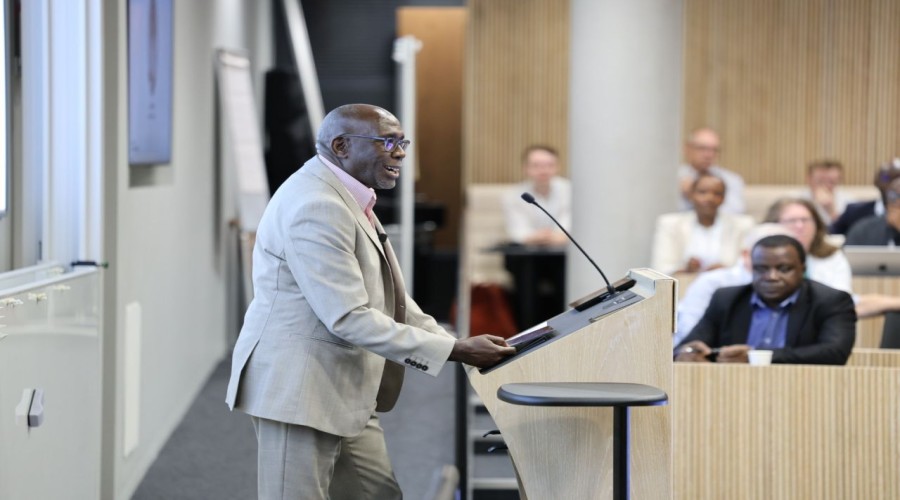
The meeting opened with
reflections from partners involved in the Collaborative, including Science for
Africa Foundation Chief Executive Officer Dr Tom Kariuki, who highlighted the
organisation’s growth since its inception in Nairobi a year ago.
In its first year, the
Collaborative has expanded to include 38 institutions and 42 research leaders
and partners across 20 countries. Researchers are working through seven EPSILON
networks focused on strengthening Africa’s capacity in epidemic and pandemic
sciences.
The initiative is designed
to strengthen African scientific leadership and research capacity by supporting
emerging researchers and women scientists, strengthening research institutions,
translating scientific evidence into policy, promoting innovation and building
cross-border partnerships.
The second Annual Meeting
comes as African countries continue to confront infectious disease outbreaks
while strengthening preparedness for future epidemics and pandemics. The
recently launched Africa Health Security Index has pointed to progress in health
security across the continent while also identifying gaps that require
sustained investment and coordinated action.
Dr Kariuki urged members of
the Collaborative to look beyond the current state of Africa’s health security
and focus on what can collectively be done to strengthen preparedness and
resilience.
The Collaborative’s first
year focused largely on establishing networks, partnerships and institutional
foundations. Its next phase is expected to place greater emphasis on
translating those foundations into research evidence, practical solutions and
measurable impact.
The Science for Africa
Foundation said it would continue supporting the Collaborative’s efforts to
build a stronger, more connected and African-led scientific ecosystem capable
of advancing epidemic and pandemic preparedness across the continent.