By: Nana
Appiah Acquaye
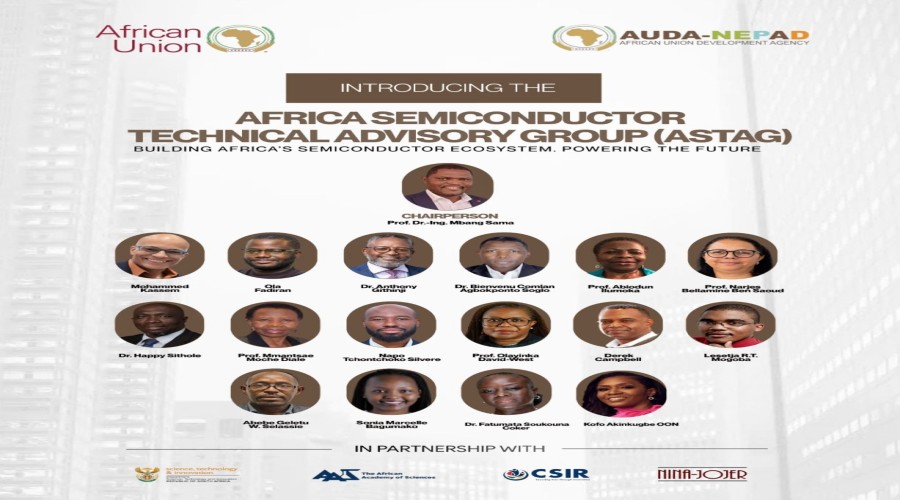
The African Union
Development Agency-NEPAD (AUDA-NEPAD) has launched the Africa Semiconductor
Technical Advisory Group (ASTAG) in South Africa to coordinate efforts to
develop Africa’s semiconductor ecosystem and reduce reliance on raw material exports.
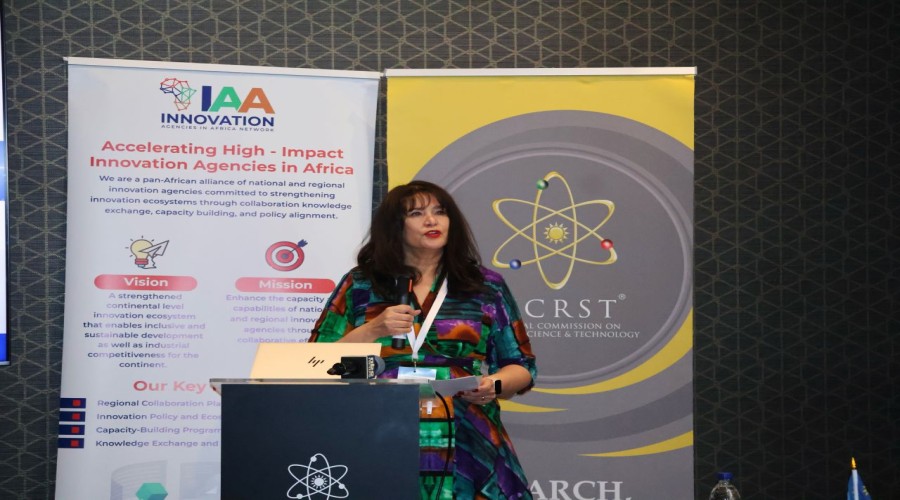
AUDA-NEPAD launched ASTAG in
partnership with the Council for Scientific and Industrial Research (CSIR), the
African Academy of Sciences, South Africa’s Department of Science, Technology
and Innovation and Nina Jojer Africa.
The initiative seeks to move
Africa from fragmented national efforts towards a coordinated, continental
semiconductor ecosystem by connecting existing capabilities in chip design,
prototyping and fabrication, research, critical minerals and technical skills.
Over the next 12 months,
ASTAG will focus on critical minerals and advanced materials; skills
development and engineering talent; semiconductor packaging, assembly and
testing; chip design, innovation and RISC-V adoption; policy, regulation and
standards; partnerships, investment and technology transfer; and semiconductor
applications in energy, health, agriculture, mobility and fintech.
The group will work towards
developing a practical Africa Semiconductor Roadmap for 2026–2030, mapping
existing capabilities across the continent and creating frameworks for shared
infrastructure and regional collaboration.
Africa holds an estimated
30% of the world’s known critical mineral reserves, according to AUDA-NEPAD,
providing a resource base for the continent’s ambitions to participate more
deeply in the global semiconductor value chain.
The agency said the
initiative reflects a strategic shift towards connecting Africa’s existing
technological and mineral assets and strengthening continental capabilities in
semiconductor development.
The ambition is to move
“from minerals to microchips, from supplier to partner, from fragmented
potential to integrated capability, and from dependence to technological
sovereignty.”