By: Kanto
Kai Okanta
Egypt’s Minister of
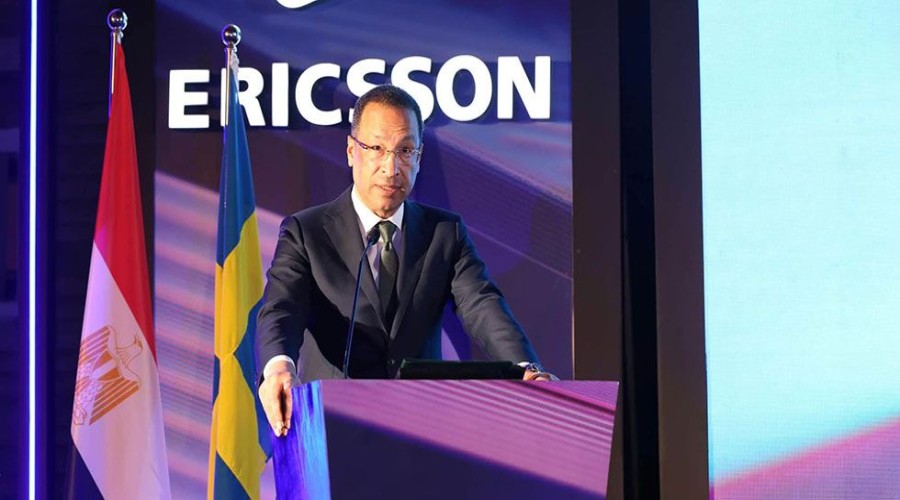
Communications and Information Technology, Eng. Raafat Hendy, has reaffirmed
the government’s commitment to strengthening cooperation with Ericsson in
telecommunications infrastructure, applied innovation and talent development as
the company celebrated 150 years since its founding and 129 years of operations
in Egypt.
The celebration, held on
October 13, 2026, brought together Swedish Ambassador to Egypt Dag
Juhlin-Dannfelt, US Embassy Chargé d’Affaires Robert Silverman, Finnish
Ambassador Riikka Illa, Japanese Embassy Economic Counselor Kobayashi Shinichi,
Ericsson North Middle East President Kevin Murphy, Ericsson Egypt President and
Head of Sales Dalia Marab, and senior government officials, diplomatic
representatives and telecommunications industry leaders.
In his remarks, Hendy said
the anniversary reflected the deep friendship between Egypt and Sweden and the
important role technology plays in strengthening ties between the two
countries. He described Ericsson as a key partner in developing Egypt’s telecommunications
sector.
Hendy said Egypt’s digital
vision centres on leveraging technology to serve humanity and achieve tangible
impact. The strategy aims to facilitate citizens’ access to digital government
services, help small businesses reach new markets and customers, and empower
young people across the country to acquire skills for better job opportunities.
He identified
telecommunications network development as a fundamental pillar of the strategy,
noting that expanding fifth-generation (5G) technology deployment is intended
not only to provide higher connection speeds but also to maximise the economic
and social value of these technologies.
The minister outlined three
main priorities for the next phase of cooperation between the Ministry and
Ericsson: establishing future-ready telecommunications networks, supporting
applied innovation and developing Egyptian talent.
He said continued investment
in telecommunications networks would improve service quality, broaden coverage
and create secure and reliable infrastructure in cooperation with
telecommunications operators and technology companies.
Hendy also highlighted the
role of artificial intelligence in improving network management efficiency,
adding that robust telecommunications networks could support new technological
solutions in the industrial, agricultural, transportation and healthcare
sectors.
He stressed the importance
of partnerships in translating these opportunities into practical applications
through joint work to test solutions, evaluate their feasibility and expand
their use.
The Ministry of
Communications and Information Technology is also committed to strengthening
cooperation in training, research and development, while enabling more Egyptian
engineers and researchers to contribute to the design of future technologies.
Hendy said stronger collaboration among companies, universities and startups
would help turn ideas into innovative products and services.
Swedish Ambassador Dag
Juhlin-Dannfelt said Ericsson’s long-standing presence in Egypt made the
anniversary particularly significant.
“What makes this occasion
particularly special is that Ericsson shares 129 years of Egypt’s 150-year
history. Ericsson began its presence in Egypt in 1897, at a time when
communications looked very different from what they are today. Since then,
Egypt has undergone an extraordinary transformation, and Ericsson has been part
of this journey,” he said.
Ericsson North Middle East
President Kevin Murphy said the company’s 150-year global history and 129-year
presence in Egypt reflected its continued commitment to the country’s
technological development.
“From the early stages of
mobile networks to today’s advanced 5G and AI-powered technologies, we have
worked hand in hand with the Egyptian government, our partners, and telecom
service providers to build a resilient and robust digital infrastructure,” Murphy
said.
“As Egypt steadily
progresses towards achieving its national digital transformation agenda,
Ericsson remains committed to working with the government to deliver
world-class connectivity services that accelerate economic growth and empower
individuals to build a fully connected and sustainable future,” he added.
Other attendees included
Information Technology Institute President Dr. Heba Saleh, National
Telecommunications Institute Director Dr. Ahmed Khattab, Eng. Saad Rushdi, head
of the Central Department for Resources and Technical Assistance and supervisor
of the Central Department for Technological Projects and Outsourcing at the
Ministry, and Dr. Abeer Shaqweer, assistant resident representative of the
United Nations Development Programme in Egypt.