By: Nana
Appiah Acquaye
The European Union Agency
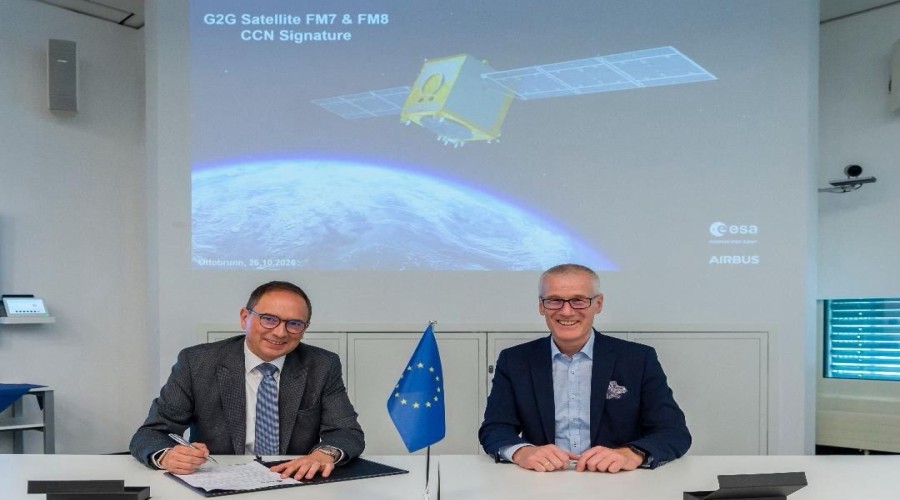
for the Space Programme (EUSPA) has extended contracts with Thales Alenia Space
and Airbus to build four additional Galileo Second Generation satellites, in a
move aimed at strengthening Europe’s satellite navigation capabilities.
Laurent Jaffart, European
Space Agency (ESA) Director of Resilience, Navigation and Connectivity and Head
of ECSAT, announced the contract extensions from Rome, Italy, and Ottobrunn,
Germany, on behalf of EUSPA.
The additional satellites
are expected to reinforce the resilience, continuity and future evolution of
Galileo, Europe’s satellite navigation system, which Jaffart described as
crucial to the continent’s autonomy, security and competitiveness.
“Europe must have the
capability to secure its own future in space,” Jaffart said, describing Galileo
as “a powerful demonstration of what we can achieve when we combine long-term
strategic vision, sustained investment, and world-class European industry.”
During a visit to Rome last
week, Jaffart also revisited Thales Alenia Space’s Space Smart Factory, one of
Europe’s advanced satellite production facilities.
The factory will play a key
role in integrating and testing two of the additional Galileo satellites,
demonstrating the industrial excellence, advanced manufacturing capabilities
and engineering expertise needed to sustain Europe’s position in space.
Jaffart said strategic
autonomy was not an ambition Europe could simply declare, but “a capability we
must build, invest in, and deliver.”
“Through Galileo, Europe is
doing precisely that: strengthening a critical infrastructure while ensuring
that the expertise and industrial capacity needed for its future remain firmly
established in Europe,” he said.
The contract extensions form
part of efforts to maintain and develop Europe’s satellite navigation
infrastructure while ensuring that the industrial expertise required for its
future remains within the continent.