By: Tewodros Balcha
Ethiopia's
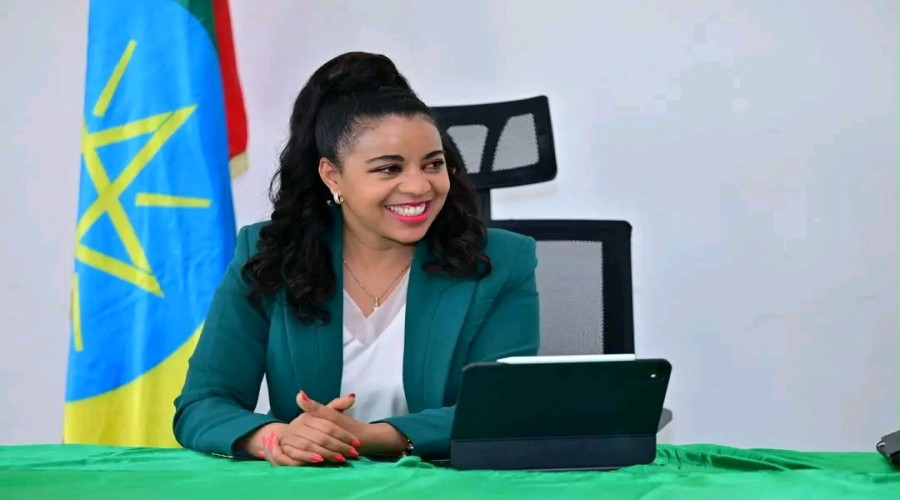
Minister of Innovation and Technology, Frehiwot Tamru, has set out a plan to
bring the Innovation and Technology Talent Development Institute into
operation, directing an institutional and operational review of a facility inaugurated
four years ago that is now being prepared to begin delivering its intended
services, according to a Ministry statement.
During an Oct
29 visit to the institute in Burayu, Frehiwot directed the immediate creation
of a steering committee to establish its legal and organisational foundations
and to inventory its buildings, equipment and readiness to receive talented
young people from across the country.
The institute
was inaugurated by Prime Minister Abiy Ahmed in October 2022 as a specialised
centre where exceptional students could develop their abilities without leaving
regular education. Initial plans indicated capacity for 500 students, rising to
1,000. It has classrooms, laboratories, workshops and dormitories, but an
assessment presented by Director General Mesay Hailemariam said it still lacks
an appropriate organisational structure, qualified staff, effective operating
systems and adequate resources, and needs maintenance, renovation and
additional equipment.
Frehiwot said
bringing the institute into operation requires more than renovation. Its
purpose, beneficiaries and role, and how it differs from conventional schools
and universities, must first be defined, along with the measurable contribution
it is expected to make. She said it should focus on identifying exceptionally
talented young people, including those missed by the formal education system,
and support them through ptailored programmes and expert mentorship. She also
called on schools, universities, research bodies and industry to help build a
talent development framework spanning selection, mentorship and progress
monitoring.
The visit is
the latest in a series of reviews since Frehiwot became minister on Oct 8. Her
first major engagement brought together the heads of six institutions
accountable to the Ministry, and she asked each to prepare a status assessment.
The Ministry then held a five-day internal performance and capacity review from
Oct 19 to 23, whose findings are meant to inform its next five-year strategic
plan. On Oct 26 she visited the Space Science and Geospatial Institute, where
talks covered geospatial infrastructure, expanding digital addressing beyond
selected cities and a proposed national communications satellite. The next day
she told the Ethiopian Communications Authority to put measurable public
benefits, including wider access, better quality and affordability, and
stronger consumer protection, at the centre of its planning.
Frehiwot ran
Ethio Telecom as chief executive from 2018 until her appointment to overlook
the Ministry's broader remit spanning telecoms regulation, research, space
science, standards, intellectual property and technical skills. Her early moves
suggest a preference for institutional diagnosis, clearer mandates and
measurable performance before new programmes, though whether this becomes a
wider transformation will depend on implementation, resources and results.
For the Burayu
institute, the test is straightforward: turning an investment made and a vision
announced four years ago into an operating institution that can find and
develop Ethiopia's most gifted young technologists.