By: Nana
Appiah Acquaye
The Centre for Space Life
Sciences (CSLS), Ibadan, has deepened its collaboration with the University of
Ibadan through a strategic engagement focused on advancing computing,
artificial intelligence, and data science capabilities in support of Nigeria’s space
science ecosystem.
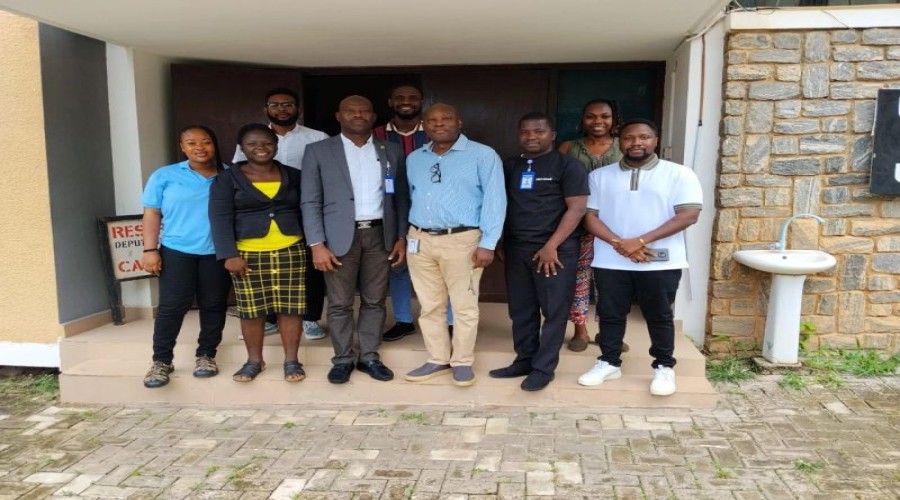
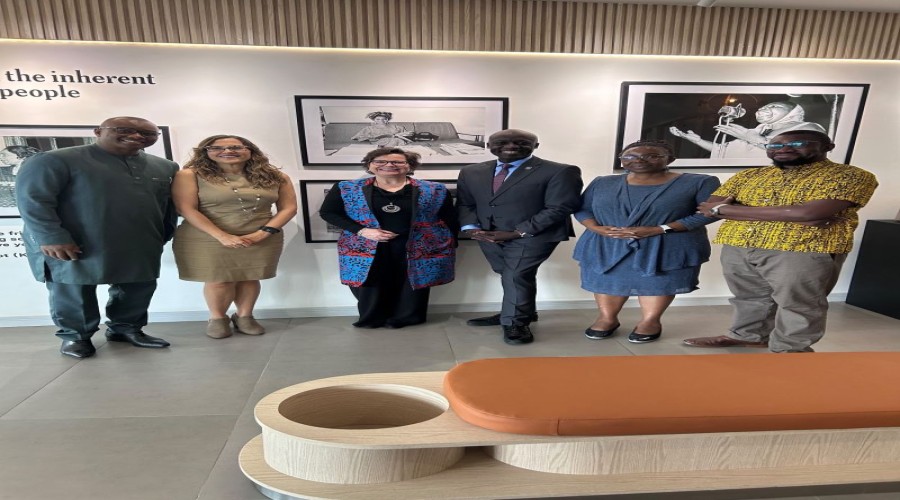
The engagement, brought
together CSLS leadership and a senior academic delegation from the Faculty of
Computing, University of Ibadan, led by Professor Oluseyi Osunade, alongside
Dr. Blessing Asoro. The CSLS delegation was led by Acting Director Dr. Olakunle
Oladosu and included staff from the ICT, astrobiology, and space medicine
units.
The meeting builds on the
NASRDA–University of Ibadan partnership formalised in December 2025 and expands
its scope into emerging digital disciplines critical to space research and
innovation.
Discussions highlighted the
rapid growth of the Faculty of Computing, which now comprises four departments,
approximately 40 academic staff members, and six undergraduate programmes
spanning Computer Science, Artificial Intelligence, Data Science, Software
Engineering, Information and Communication Technology, and Cybersecurity.
Both institutions explored
modular postgraduate training pathways designed to enable CSLS personnel to
progressively acquire advanced qualifications, including master’s degrees,
while remaining in active service. The faculty also expressed strong interest
in interdisciplinary research collaboration, identifying space science as a
natural extension of its existing partnerships in health, archaeology, and
cybersecurity.
Key areas of collaboration
discussed include joint research initiatives, curriculum development, staff
training programmes, co-supervision of postgraduate students, and short courses
in artificial intelligence, data science, and cybersecurity. The engagement
also outlined student participation pathways linking University of Ibadan
computing students to the African Space Expo and related innovation hackathons,
supported by mentorship from CSLS.
Several immediate next steps
were agreed upon, including a CSLS presentation on the African Space Expo for
master’s students scheduled for July 1, 2026, the development of a structured
framework for student hackathon participation, and exploration of staff
sponsorship opportunities for postgraduate study and joint supervision
arrangements. CSLS will also attend Professor Osunade’s inaugural lecture
scheduled for August 20, 2026.