By: Nana
Appiah Acquaye
Angola’s National Space
Programme Management Office (GGPEN) is participating in African regional
meetings on radio spectrum management and preparations for the 2027 World
Radiocommunication Conference (WRC-27) taking place in Tunis, Tunisia, from
September 7 to 11, 2026.
GGPEN is part of the Angolan
delegation coordinated by the Ministry of Telecommunications, Information
Technologies and Social Communication (MINTTICS), with the institution
represented by the Head of the Department of Support to the Director General,
Ivandro Peterson Alves Rodrigues.
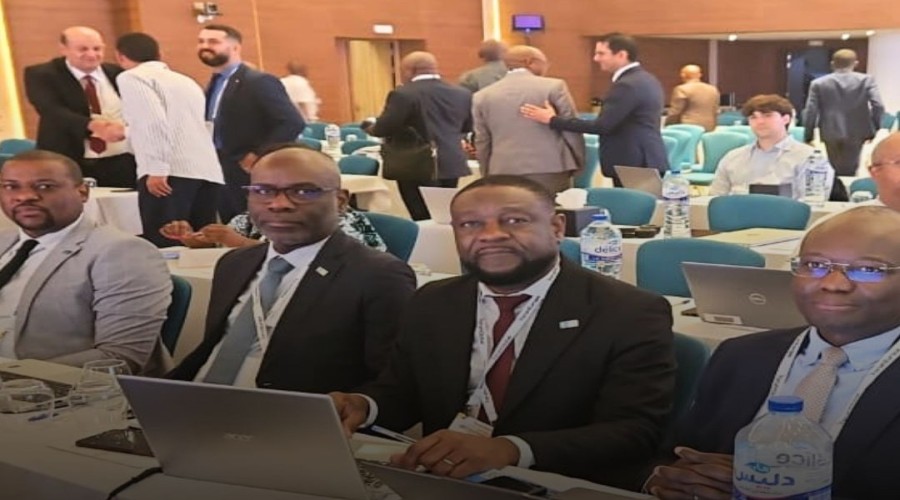
The delegation participated
on the first day in the 11th African Conference on Spectrum Management, which
brought together representatives from national administrations, regulators,
international organisations and industry to examine challenges and opportunities
surrounding the future of connectivity in Africa.
Key discussions focused on
developing the African position for WRC-27, improving the use of mid-frequency
spectrum bands, licensing and pricing models, coverage obligations and the
social and economic value of spectrum.
Participants also examined
the potential of direct-to-device (D2D) communications to extend connectivity
to rural and underserved areas.
The space-related
discussions addressed regulatory approaches for D2D services and multi-orbit
satellite systems, coexistence between geostationary and non-geostationary
satellite constellations, prevention of harmful interference and protection of
orbital resources and frequencies used by satellite services.
From September 8 to 11, the
Angolan delegation will participate in the 3rd African Preparatory Meeting for
WRC-27 (APM27-3), organised by the African Telecommunication Union.
The preparatory meeting will
bring together working groups to examine the various items on the WRC-27
agenda, with the objective of aligning national and sub-regional positions and
developing Common African Proposals ahead of the global conference.
GGPEN’s participation
provides Angola with an opportunity to monitor regulatory and technical issues
that directly affect satellite communications, safeguard the country’s orbital
and spectrum interests and support the expansion of new connectivity solutions.